One of the most frustrating conversations we have with business owners goes like this:
“The accounts say we're profitable, but there's never any cash in the bank.”
This isn't unusual. In fact, it's one of the most common financial problems facing growing UK businesses.
And it doesn't mean the business is failing. It usually means the business owner is looking at the wrong numbers, or seeing them too late.
Profit and Cash Are Not the Same Thing
Profit is an accounting measure. Cash is reality. You can be profitable and still run out of money, because profit includes:
- Invoices you haven't been paid for yet
- Costs spread over time
- Accounting adjustments that don't affect the bank
Cash only cares about one thing: what has actually gone in and out of your bank account.
Until business owners understand this difference, they feel like they're working hard with nothing to show for it. (We look at the same gap from the sales side in Revenue is up. So why doesn’t it feel like your business is doing better?)
The Most Common Reasons Cash Disappears
1. Customers pay slowly
Sales look great on paper, but invoices are unpaid. Profit shows up immediately. Cash doesn't.
2. VAT and tax are sitting in the bank
Money looks available, but part of it belongs to HMRC. When the bill lands, the bank balance drops sharply.
3. Stock and work in progress tie up cash
Growing businesses reinvest in stock, materials or projects. Profit looks healthy. Cash gets trapped.
4. Loan repayments don't hit profit
Capital repayments reduce cash but don't show in profit figures. This catches business owners out repeatedly.
5. Drawings grow faster than the business can support
As confidence grows, so do personal withdrawals — often before the cash position can support them.
None of these are mistakes. They're symptoms of growth without visibility.
Cash Flow Is a Lagging Indicator
Cash flow problems don't appear overnight. They build quietly as margins erode, costs creep up, payment timing slips and decisions are made without clear numbers. By the time cash becomes the focus, the real causes are already in motion.
Why Growth Often Makes It Worse
It's natural to assume more sales will fix the cash problem. In reality, growth increases working capital needs, stretches payment terms and magnifies inefficiency. Without visibility, growth adds to the pressure instead of relieving it.
Why Annual Accounts Don't Help Here
Statutory accounts are backward-looking. They're designed for compliance, not control. By the time annual accounts tell you there's a problem, the cash has gone and the decisions have been made.
Control Starts With Regular, Accurate Bookkeeping
Businesses gain control when:
- Bookkeeping is done frequently, not months later
- Bank balances are reconciled properly
- VAT is separated from operating cash
- Management reports are reviewed regularly
Many businesses struggle here not because they don't care, but because the bookkeeping is rushed, reports arrive too late, or the numbers aren't explained clearly.
What Good Cash Visibility Looks Like
Businesses with strong cash control typically have:
- up-to-date bookkeeping
- regular reviews of margins and costs
- clarity on when customers will pay and when suppliers are due
- a simple forward view of cash, even if it's imperfect
They don't predict the future perfectly. They spot problems early enough to act.
Cash Flow Forecasting Doesn't Need to Be Complex
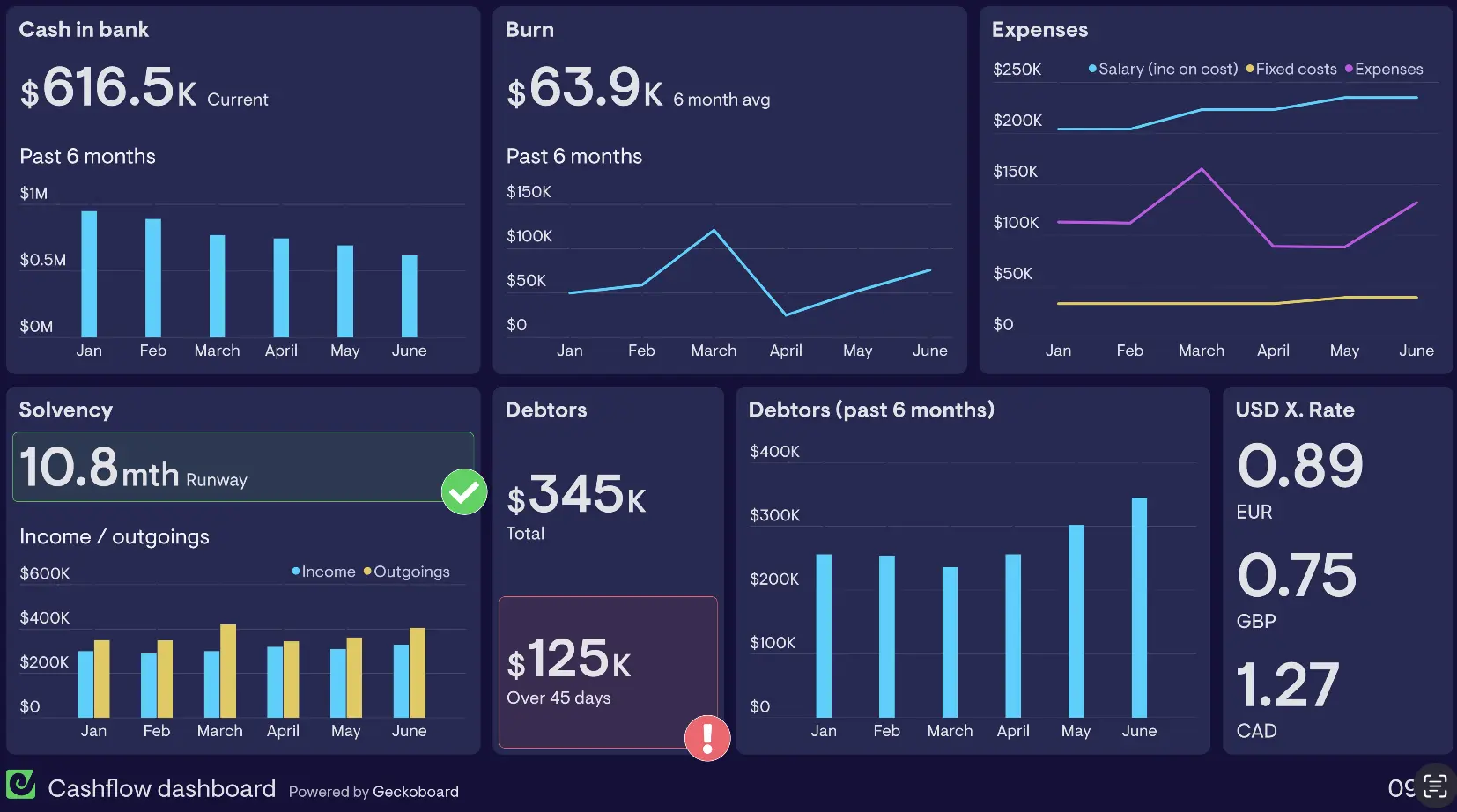
At its simplest, business owners need to know what cash is coming in, what is going out, and when the pressure points will hit. Reviewed monthly, or even weekly, that takes the panic out of decisions and gives you breathing room.
Final Thought
If your business is profitable but cash feels tight, the issue usually isn't effort or ambition. It's visibility.
When the numbers are kept up to date through reliable bookkeeping and reviewed through regular management reporting, cash stops being a mystery and becomes something you can manage.